UX Design Internship at Google Chrome
Contributed to multiple high-impact projects on Chrome, designing and prototyping interfaces and new features to improve product usability, accelerate project timelines, and influence product strategy.
My Role
UX Design Intern
Team
Chrome UX
Company
Google
Duration
May 2025 - August 2025
Tools
Figma, Google Workspace, Gemini, Whisk
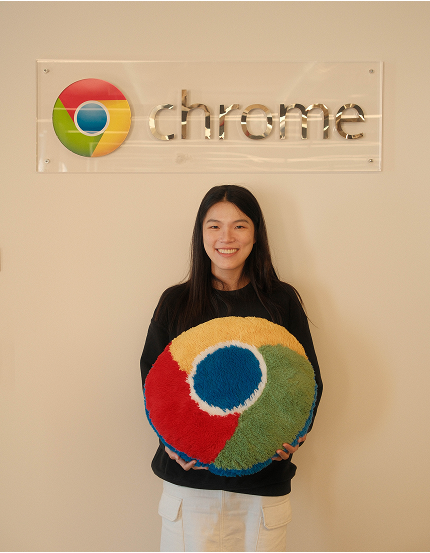
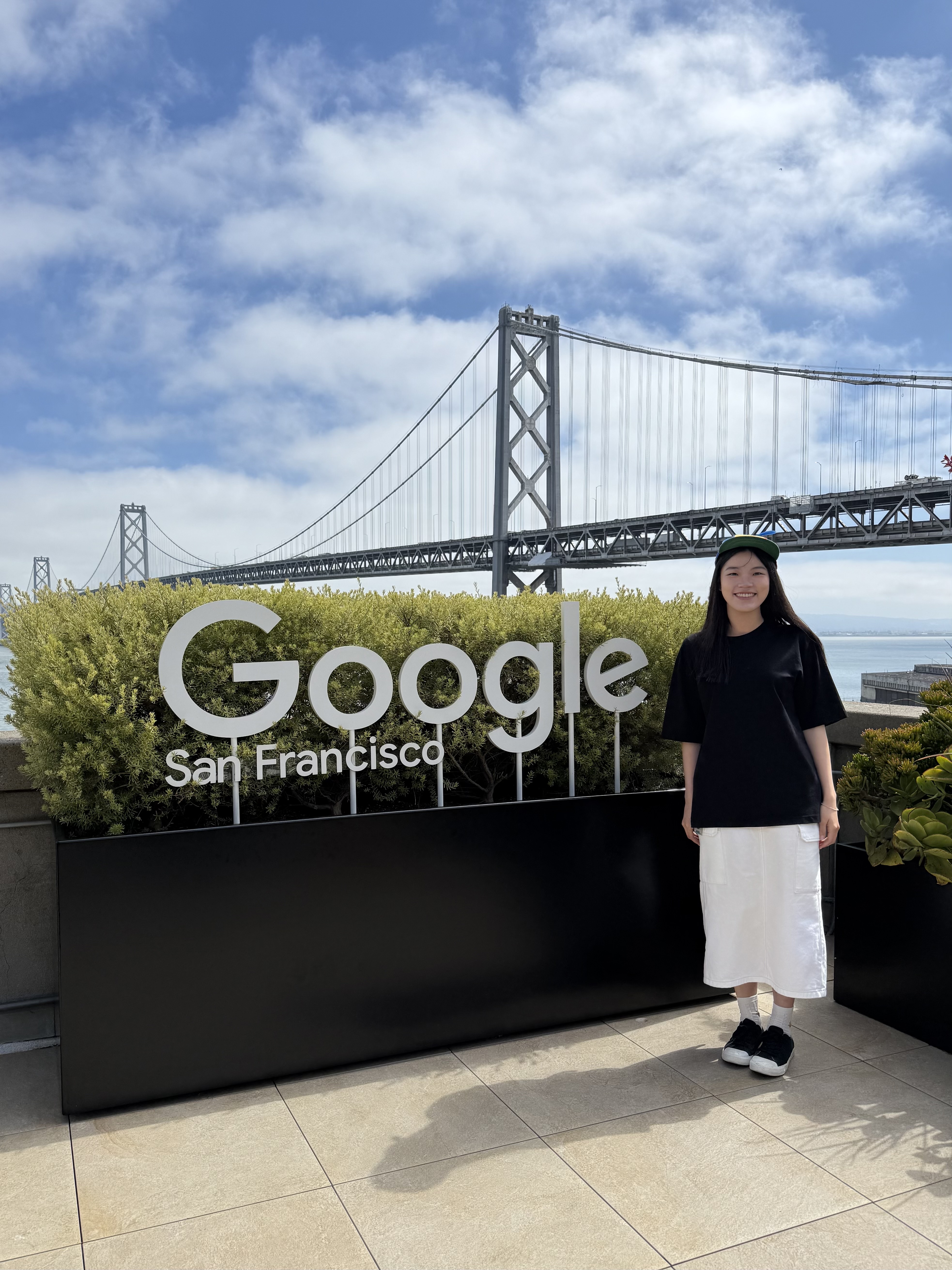
I spent the summer of 2025, having an absolute blast working  at Google as a UX designer based in San Francisco.

I learned how important it was to work as a collaborator, a role that goes beyond just being a designer. This includes my initiative to host workshops with cross-functional teams to pinpoint the project’s direction and being confident in my decisions to justify design decisions.
My work is under NDA. This case study onlyshows my main learnings
Google
My time at Google as a UX Design Intern on the Chrome UX team, working on Chrome Enterprise
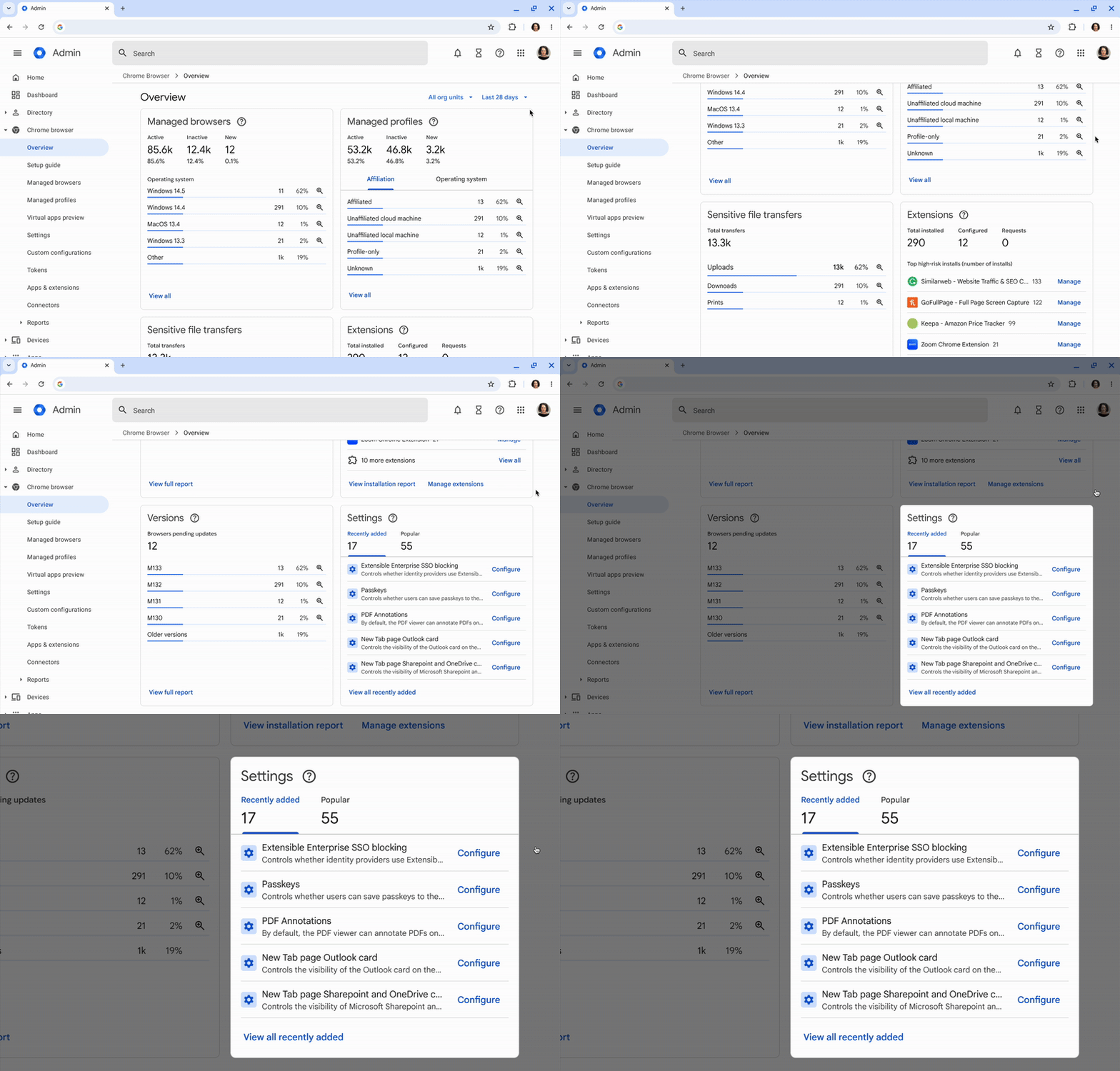
Chrome Enterprise Overview Page Settings Insights
Empowers admins by providing proactive and actionable settings on the admin console overview page, helping them identify settings and driving configuration efficiently.
The tradeoff in this project was between shipping something feasible within the current scope and timeline, versus addressing the most critical user need. The original direction was to highlight new and popular settings, which was easier to implement and aligned with the product plan. But when I dug into the research, I realized that settings conflicts were actually a more urgent issue for admins. So the tension became: do we stay with the safer, simpler direction, or do we push toward something more valuable for users, even if it introduces more complexity?

The signal that made me think it was worth the risk came from research. I reviewed the UX research report and noticed that settings conflicts kept coming up as a major pain point. To validate that further, I talked with the UX researcher and customer engineers who work closely with admins. They confirmed that settings conflicts were a frequent and important issue, and the researcher also shared data showing that around 60% of users were looking for this kind of support. That gave me confidence that this was not just an interesting idea, but a real user need.

The bet I made was that the overview page should do more than just summarize information. I believed it could proactively guide admins toward actions that mattered, especially around settings conflicts. Instead of only surfacing new or popular settings, I proposed that we explore ways to make more actionable settings insights visible on the overview page.

From there, the design decision was figuring out what format could best balance user value and technical feasibility. I explored multiple directions, including separate cards, action-oriented lists, and different ways of organizing the information. I also hosted a workshop with the PM and engineers, where I shared the research insights, walked through the pros and cons of each direction, and mapped out end-to-end user flows so we could discuss feasibility more concretely. In the end, we aligned that settings conflicts were an important need, but it was too complex to build in that project phase. So for the current scope, we landed on a dynamic and actionable settings card that still improved discoverability and configuration, while the settings conflicts opportunity was prioritized as a separate workstream for another designer later on.

What I’m proud of in this project is not just the final design, but the fact that I helped the team uncover a more important user need and turn it into a future priority. It taught me that good design is not only about solving the problem in front of you, but also about recognizing when there’s a better problem worth advocating for.
Yi Ren
Staff Interaction Designer @ Google (Intern Host)
I managed Joan during her UX Design internship at Google and I highly recommend her for any UX Design role.

Joan consistently performed at the level of a full-time, seasoned designer. She demonstrated professionalism and strong UX expertise from the start, effectively leading cross-functional collaborations on a highly technical product, often without senior design oversight. Her leadership was recognized by her PM, who noted that working with Joan felt like working with a permanent member of the team.

A key example of her impact was on the Chrome Enterprise Overview page. After reviewing user research, Joan identified a high-impact user need that was not prioritized. Despite initial engineering and PM pushback, she used strong rationale and clear design presentations to convince the cross-functional team. Her advocacy directly resulted in the creation of a new workstream, a significant accomplishment.

In addition to that core project, Joan showed great initiative by successfully completing three projects, exceeding the expectation of one or two. She is skilled at working through ambiguity, iterating on concepts, and presenting her work clearly and effectively.

Joan exceeded our expectations for the internship. She is a strong user advocate, an effective collaborator, and would be a valuable asset to any design team.
Crystal Wang
Interaction Designer @ Google (Intern Co-Host)
It was a pleasure to host Joan for her summer internship on the Google Chrome team. She was an exceptional contributor from day one—proactive, collaborative, and highly detail-oriented. Joan has a rare ability to grasp complex technical concepts quickly and operate with remarkable efficiency.

During her internship, she expertly demonstrated her comprehensive skills in interaction, motion, and visual design. Joan has my highest recommendation, and I'm confident she would be a valuable asset to any team she joins. I can only wish to work with her more again in the future!
Fengyi Zhang
UX Researcher @ Google
Joan is a phenomenal UX design intern! As the UXR on the team, I was impressed by her commitment to deep user focus. Joan partnered closely with me to clarify admin needs, successfully leveraging research insights to drive her design decisions.

She is also an exceptional collaborator who delivered high quality production-ready designs with impressive velocity. Any team would be lucky to have her!
Maxime Martin
Product Manager @ Google
I highly recommend working with Joan! As a Product Manager, I had the pleasure of seeing her in action, and she was a huge asset to our team.

Joan was proactive in collaborating with me to pinpoint project requirements, and her thoughtful questions were instrumental in defining the core problems we needed to solve, ensuring her work always met both business objectives and user needs. She also took the initiative to run a crucial UX workshop with both the Product and Engineering teams, a step that was key to keeping our project on track. Her talent for communicating her user-centered design choices with absolute clarity was a game-changer. Any team would be lucky to have her.
Anuj Goyal
Product Manager @ Google
I would strongly recommend Joan! During her internship, Joan was an invaluable member of our team, consistently producing work of exceptional quality for our website.

She possesses strong visual design skills, a great understanding of user experience principles, and was able to rapidly build an UX deck so that I could have detailed conversations with our eng team.

Joan worked with me to clarify project requirements, define problems, and explore potential solutions - this ensured her work was always aligned with my business goals as well as user needs. Furthermore, she consistently delivered her work with remarkable speed and efficiency without sacrificing quality. Her ability to quickly turn around high-quality work made a significant impact on our team's productivity. She would be a tremendous asset to any organization!
I led two projects during the summer, focusing on high-traffic pages on Chrome Enterprise.
Key Accomplishments
Led design for two projects, effectively communicated to cross-functional teams (PM, designers, engineers, UXR), securing launch approval, and driving development towards a Q4 2025 launch
Identified an overlooked feature with high user value and proposed a solution, leading to a new workstream assigned to an FTE designer to bring the feature to life
Designed UI for highly visited product pages within Chrome Enterprise admin console, driving improved usability and contributing to increased customer retention and new product adoption
Accelerated project timelines and built consensus by leading workshops with PM and Engineers, ensuring design solutions balanced user needs with business goals and technical feasibility
Proactively supported product strategy by visualizing early-stage concepts, generating new feature ideas, and influencing project direction for 2026
Internship Overview
🔎
Gaining Context
To gain context for the product and user, I first familiarized myself with the users by reviewing user research reports and speaking with the UX researcher. I then conducted a fresh-eyes audit of the product to understand the existing experience. I also gained a deeper understanding of the product by meeting 1 on 1 with the PM, engineer, and designers, who provided insights from the business, engineering, and user perspectives.
Collaborating with cross-functional teams
I approach collaboration with cross-functional teams by clarifying product requirements, gathering insights from the UX researcher, and leading workshops with stakeholders to align on the direction. I usually visualize my thinking quickly to have a conversation. This allows for rapid iteration and ensures that designs balance user needs with business objectives and technical feasibility.
🎨
Designing & Prototyping
When designing, I iterated rapidly and conducted an analysis of alternatives to influence project direction and navigate technical challenges. I started to think above and beyond to explore user needs, then converged to balance between ideal and feasible solutions.
📖
Storytelling & Communication
To showcase the results and submit for leadership approval, I presented the process in a deck with a strong narrative, including who the user is, what the problem is, why my solution matters, and showing the tradeoffs behind the solution. I improved my storytelling by constantly asking for feedback, and I learned a lot of skills on how to present my thinking through a slide.

👐🏻
Expanding Network
I had a coffee chat with more than 50 Googlers within my 13 weeks, where I got more familiar with the product, built trust, and learned insightful lessons from diverse perspectives. Taking initiatives to have a conversation and expanding my network is one of the most valuable skills I learned at Google.
“Don’t just be a designer, be a collaborator.”
My manager gave me the advice on my first week. I spent my internship learning and practicing being as a collaborator. For example, I clarified product requirement with my PMs to pinpoint the project’s direction, and I took initiative to run workshops with stakeholders.

The process really helps me see the power of being beyond designer and I found this is the journey I’d like to keep exploring.